
|
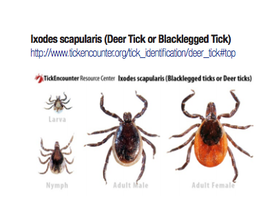
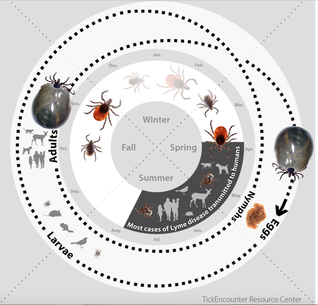
In Episode 253 : Vaccine Induced Lyme Syndrome, Artist and Horse Trainer, Aeron Mack of Middleburg, VA tells us about her Vaccine induced Lyme Syndrome research and shares her story of bringing her horses back to health. You can also find great resources about Lyme disease and Vaccine Induced Lyme Syndrome on Aeron's blog page. The TCVM segment starts at 40:30.  Lyme Disease and Vaccine Induced Lyme Syndrome |
Epm part one | EPM part two |
What is Equine Protozoal Myeloencephalitis - EPM ?
EPM is a syndrome caused by single celled organisms (protozoa) that infect the horse and cause inflammation and pain in the brain, spinal cord and muscles. This inflammation can cause clinical signs like lameness, weakness, a behavior change, stumbling, muscle atrophy.
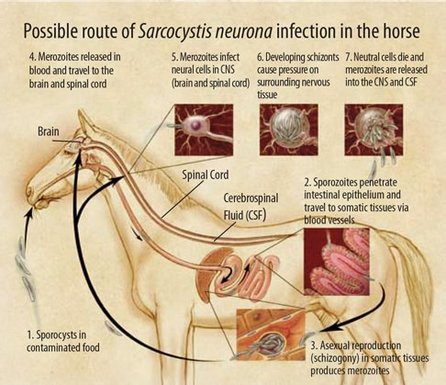
The definitive host, the opossum is infected by eating infected muscle tissue from his prey or road kill that happens to be an intermediate host. Intermediate hosts have been identified as armadillos, cats, skunks, racoons, sea otters and harbor seals. The parasite then replicates inside the opossum to an infective stage and is released upon the world in opossum poop. The horse becomes infected when he ingests sporocysts from food or water that has been contaminated with opossum droppings.
The horse is a dead end host for the parasite, meaning the horse's body is not the right environment for the protozoa and it eventually dies off before completing its life cycle. These dead parasites can cause damage to any part of the nervous system so any neurologic sign is possible. Symptoms can be acute or chronic, severe or mild so it is a very difficult disease to identify and diagnose.
EPM is a syndrome caused by single celled organisms (protozoa) that infect the horse and cause inflammation and pain in the brain, spinal cord and muscles. This inflammation can cause clinical signs like lameness, weakness, a behavior change, stumbling, muscle atrophy.
The definitive host, the opossum is infected by eating infected muscle tissue from his prey or road kill that happens to be an intermediate host. Intermediate hosts have been identified as armadillos, cats, skunks, racoons, sea otters and harbor seals. The parasite then replicates inside the opossum to an infective stage and is released upon the world in opossum poop. The horse becomes infected when he ingests sporocysts from food or water that has been contaminated with opossum droppings.
The horse is a dead end host for the parasite, meaning the horse's body is not the right environment for the protozoa and it eventually dies off before completing its life cycle. These dead parasites can cause damage to any part of the nervous system so any neurologic sign is possible. Symptoms can be acute or chronic, severe or mild so it is a very difficult disease to identify and diagnose.
How is it Diagnosed ?
Owners usually notice a change in behavior as the first sign, maybe the horse is now all of a sudden spooky on trails or has started bucking. Sometimes the signs can be as subtle as muscle atrophy and/or poor performance. In these cases we will typically be called in a few months later when many common issues are ruled out and the neuro signs start to become more evident.
EPM can sometimes present very suddenly with a downed horse and diseases like neurologic rhino or Eastern Encephalitis or West Nile need to be ruled out and aggressive supportive care needs to be started immediately. These cases will go into a clinic and diagnostic test may include a spinal tap which is the gold standard for diagnosis for EPM. In the early stages with mild symptoms, conventional diagnosis can be a positive response to treatment such as Rebalance or Marquis.
TCVM Diagnosis and Treatment
In our practice each exam starts with tongue and pulse diagnosis plus an acupuncture point scan follow by standing and moving evaluations. A horse with EPM will usually be very painful in his whole body and have some level of neurologic abnormality. The scan may reveal other concurrent diseases such as ulcers or arthritis.
The TCVM diagnosis is a mixed pattern of Qi Stagnation (pain) and Qi Deficiency (weakness).
If we suspect EPM we take a blood sample and send it to Dr. Ellison at Pathogenes to screen for EPM and Lyme's Disease. Dr. Ellison has developed some novel tests and protocols to diagnose and treat EPM. You can read more about it on her website and listen to her interview on the TCVM seg of the driving radio show ....scroll down for the player. *** Many Thanks to Kate McCaffery for encouraging us to participate in Dr. Ellison's program****
Acupuncture and Chiropractic Care would focus on relieving the pain, tonifying the Qi and supporting the immune system. The points I use will be based on the exam but because there is an autoimmune component to these cases I always include hemo-acupuncture which involves injecting some of the horse's own blood into certain points.
Herbal Therapy
Herbal Therapy is very helpful in these cases for 3-6 months after the initial diagnosis and treatment.
Qing Hao San - "Artemisia Powder"
Tonifies the Qi, strengthens the immune system and eliminate the parasites.
Dr. Xie developed Qing Hao San based on Dr. Tu's nobel prize winning research using Artemisia to treat Malaria (also a protozoa like Sarcocystis), combined with of 2 traditional formulas, Guan Zhong San (Dryopteris Root powder) and Si Jun Zi Tang (4 Gentleman). Read more about Dr. Tu's research here.
To Order Qing Hao San, follow this link
Food Therapy
Our food therapy recommendation include foods that are high in vitamin E and antioxidants.
Black Sunflower seeds - high in Vit E and omega fatty acids
Chia Seeds - High in Vit B and omega 3s, Black sunflower seeds have an imbalance of omega 6 to omega 3, the chia can help balance that ratio.
Lyceum berries (goji berries) high in Vit C and antioxidants
Spirulina immune booster by stimulating IgG antibody production
My favorite sources are
Sunflower seeds - TSC
Chia - US Chia
Lyceum berries and Spirulina - nuts.com
Homework
What can you do to help your horse recover and reduce the chance of reinfection.
- Do not leave feed tubs in stalls or in the pasture overnight and wash feed and water buckets daily.
- Avoid leaving pet food in the barn your barn cats can eat mice !
- Review your wellness program with your vet to make sure you are helping and not harming your horse's immune system
Coming soon - rehab exercise videos
In part I we talked about the benefits of food therapy so now we will discuss how to incorporate these principles into your daily routine.
Some things to remember :
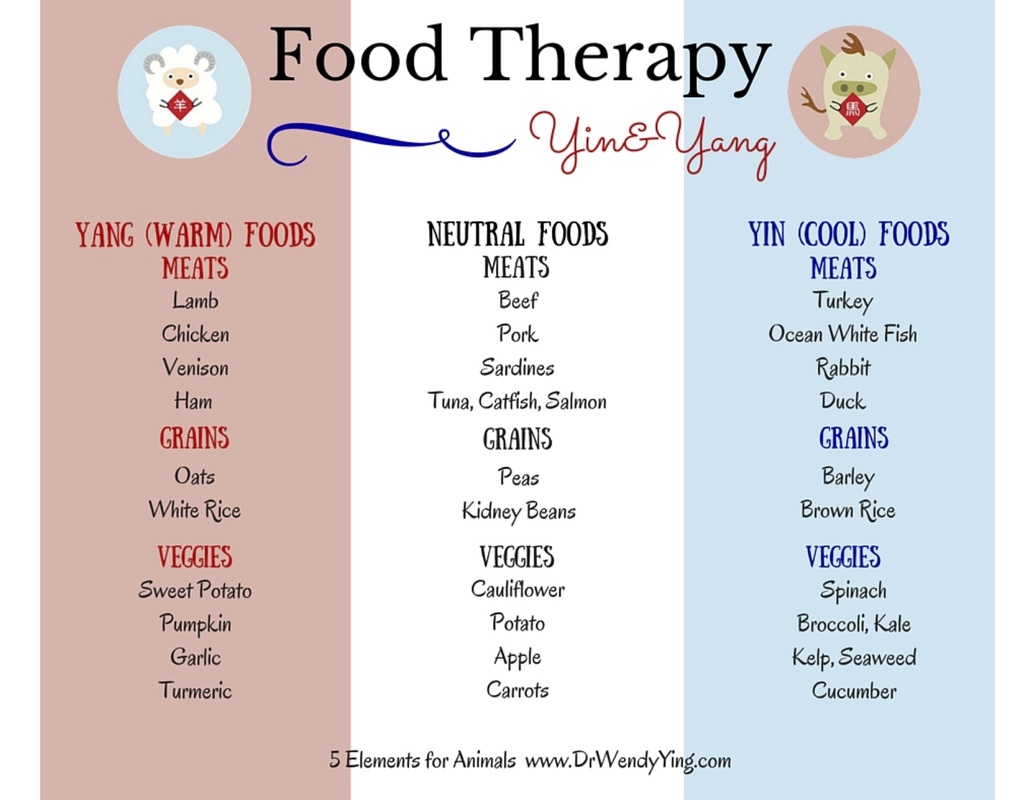
A good base diet consists of 30% grain/starch, 40% protein and 30 % veggies plus supplements like sardines, hard boiled egg, flax based supplements, herbs and spices. You can pick and choose a neutral, warm or cool diet from the chart below.
Suggestions for a dog with a Qi and Yang deficiency during the winter months would be 30% brown rice, oats and/or sweet potato, 30% chicken, beef, beef liver, venison and/or lamb and 30 % dark green leafy veggies like chopped spinach, kale and kelp. Other veggies you might try are green beans, carrots and green and yellow squash.
For a dog with a Blood deficiency (dry flaky skin, itching and general weakness and malaise) choose a neutral diet of ground beef and kidney beans with carrots and peas but add in foods that Tonify the Blood like liver. Sardines and hard boiled eggs also Tonify the blood and are high in omega 3 fatty acids.
For a dog with a Kidney Qi deficiency choose a base diet like sweet potato, turkey, spinach and kale and add in foods that will help the kidney like lamb's kidney, kelp, kidney beans and black sesame seeds.
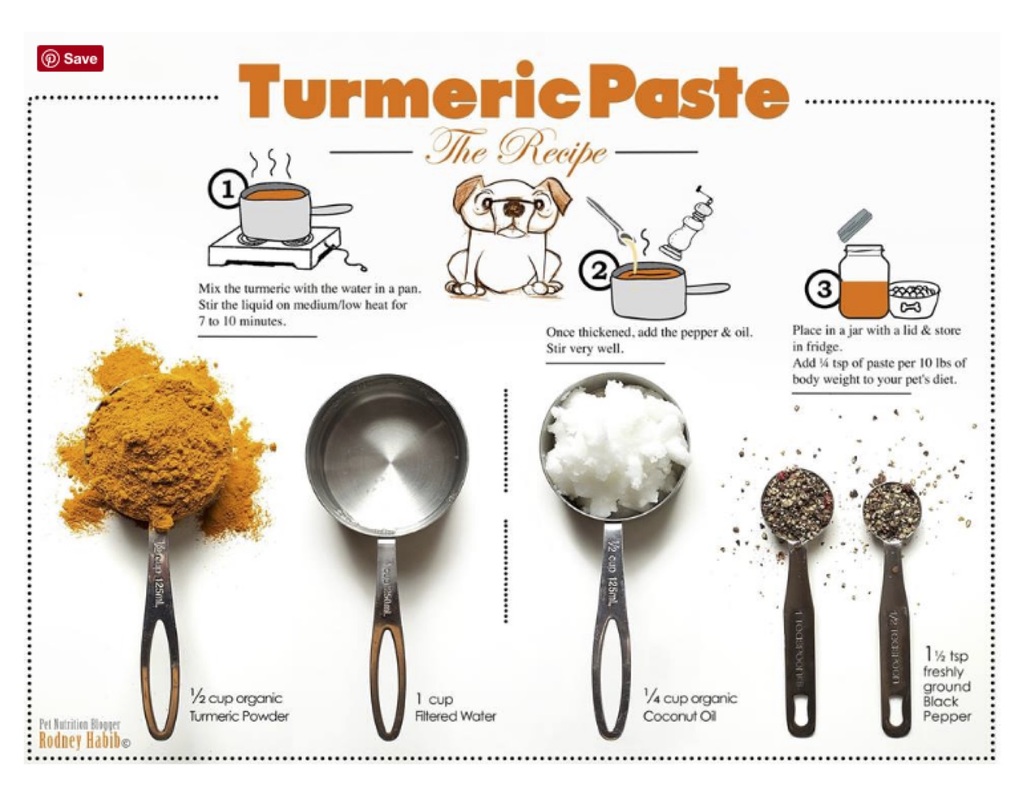
As a general rule I add turmeric paste (see recipe below), fresh ginger, salt and local honey to each meal and then top it with a splash of apple cider vinegar and either a sardine or hard boiled egg.
Here is an example of how I make a base diet for my dogs at home :
Then at each feeding I add some turmeric paste, a splash of apple cider vinegar, any herbs or supplements they may taking and either a half a sardine or half a hard boiled egg with the shell. Big dogs can have a whole sardine or whole egg. I add a little warm water to dissolve the turmeric paste, give it a stir and it's ready to eat.
One of the roadblocks to start home cooking is the worry that your dog will not have a balanced diet. With lots of variety, a balanced diet over time is easy to achieve but you can always add a high quality supplement to be sure. I like Platinum Performance CJ. It is a flax based supplement made in the USA and developed by veterinarians. You can order this from our website or from platinum performance directly. http://www.platinumperformance.com/platinum-performance-canine-cj-supplment
As with any food change start very slowly and discuss it with your veterinarian first. If your dog has been on kibble his whole life, changing to home cooked food can be very hard on his stomach. Start with a few bites of home cooked food on his regular food and slowly incorporate more over a month's time. Some dogs love their kibble or 100% home cooking is not an option and that is ok. You can just top your dog's food with some home cooked food and he will still get the benefits of fresh food and omega 3 fatty acids.
If you are looking for some great whole food dog treats based on chinese medicine principles, check out Doggone good goodies. https://www.facebook.com/DoggoneGoodGoodies/
Some things to remember :
- Variety is the key to balanced diet.
- Fresh whole foods have the maximum nutrients
- Plan meals with a balance of Yin and Yang Energies
- Add foods to address specific conditions
A good base diet consists of 30% grain/starch, 40% protein and 30 % veggies plus supplements like sardines, hard boiled egg, flax based supplements, herbs and spices. You can pick and choose a neutral, warm or cool diet from the chart below.
Suggestions for a dog with a Qi and Yang deficiency during the winter months would be 30% brown rice, oats and/or sweet potato, 30% chicken, beef, beef liver, venison and/or lamb and 30 % dark green leafy veggies like chopped spinach, kale and kelp. Other veggies you might try are green beans, carrots and green and yellow squash.
For a dog with a Blood deficiency (dry flaky skin, itching and general weakness and malaise) choose a neutral diet of ground beef and kidney beans with carrots and peas but add in foods that Tonify the Blood like liver. Sardines and hard boiled eggs also Tonify the blood and are high in omega 3 fatty acids.
For a dog with a Kidney Qi deficiency choose a base diet like sweet potato, turkey, spinach and kale and add in foods that will help the kidney like lamb's kidney, kelp, kidney beans and black sesame seeds.
As a general rule I add turmeric paste (see recipe below), fresh ginger, salt and local honey to each meal and then top it with a splash of apple cider vinegar and either a sardine or hard boiled egg.
Here is an example of how I make a base diet for my dogs at home :
- Add 1/4 cup of coconut oil to a pot on med heat
- Brown meat or fish
- Add Ginger and salt
- Add grain or starch
- Cover with water and cook on med low until grain or starch is cooked (approx 20 min)
- Add chopped veggies and nuts or seeds
- Mix together and cook on low for 5 more min
- Add local honey
- Let cool and pack in serving size portions for the fridge and freezer
Then at each feeding I add some turmeric paste, a splash of apple cider vinegar, any herbs or supplements they may taking and either a half a sardine or half a hard boiled egg with the shell. Big dogs can have a whole sardine or whole egg. I add a little warm water to dissolve the turmeric paste, give it a stir and it's ready to eat.
One of the roadblocks to start home cooking is the worry that your dog will not have a balanced diet. With lots of variety, a balanced diet over time is easy to achieve but you can always add a high quality supplement to be sure. I like Platinum Performance CJ. It is a flax based supplement made in the USA and developed by veterinarians. You can order this from our website or from platinum performance directly. http://www.platinumperformance.com/platinum-performance-canine-cj-supplment
As with any food change start very slowly and discuss it with your veterinarian first. If your dog has been on kibble his whole life, changing to home cooked food can be very hard on his stomach. Start with a few bites of home cooked food on his regular food and slowly incorporate more over a month's time. Some dogs love their kibble or 100% home cooking is not an option and that is ok. You can just top your dog's food with some home cooked food and he will still get the benefits of fresh food and omega 3 fatty acids.
If you are looking for some great whole food dog treats based on chinese medicine principles, check out Doggone good goodies. https://www.facebook.com/DoggoneGoodGoodies/
Listen in to the Traditional Chinese Veterinary Medicine segment of the Driving Radio Show.
This week....hear Glenn squirm as we talk about screwworms !! The TCVM segment starts at 35:25
To listen to other episodes of our podcast visit The Driving Radio Show and you can find even more equine, pet and health shows on The Horse Radio Network, the voice of the horse world !
This week....hear Glenn squirm as we talk about screwworms !! The TCVM segment starts at 35:25
To listen to other episodes of our podcast visit The Driving Radio Show and you can find even more equine, pet and health shows on The Horse Radio Network, the voice of the horse world !
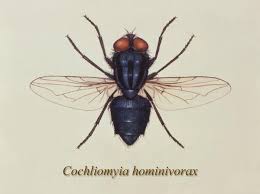
A Halloween Story ——— Cochliomyia hominivorax - “ eater of man “
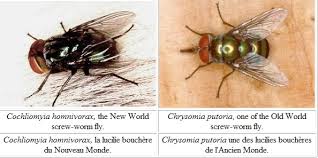
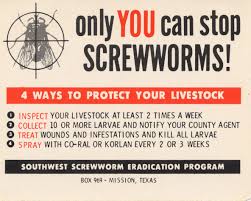
Screwworms are the larval stage of the blue bottle fly aka blow fly with a scientific name of Cochliomyia hominivorax - “ eater of man “.
The screwworm has been eradicated since the 70s but its recent discovery in a population of Key Deer has the USDA and veterinarians on high alert to contain them. They are a potential danger to ranchers of cattle and sheep but also a danger to people, horses, pets and wildlife.
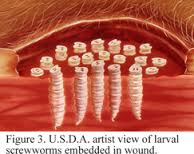
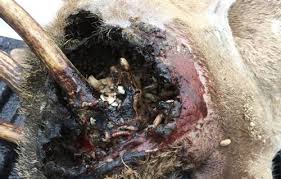
An adult female fly will “blow” her eggs (100-400) on to a fresh wound. The eggs will hatch in 12-24 hours. Screwworms differ from other larvae in that they will burrow into and eat the healthy tissue. Other maggots eat only necrotic tissue so do not cause damage to the host. Screwworm infestations can cause deep large wound tracts in flesh and bone. Any wound is an entry point even a small cut, the navel stump of a new born or the mucous membranes of the nose, mouth and eyes. After 5 -7 days they drop into the soil and pupate for only 7 days in a warm climate like south Florida. The adults can breed within 3 days after emerging from the pupa. They will mate 1 time in their life, lay eggs and die within 2-3 weeks.
Screwworm infestation was a huge problem for ranchers in the southern US and in 1958, the USDA released millions of sterile males. The theory was that the sterile males would out compete the wild males and decrease the population. Males eat only vegetation, not flesh. The program was successful and the screwworm was eradicated in the US and much of Mexico by 1972. Small populations remain in South and Central America and the Carribean and this outbreak is most likely from an animal or person traveling from an infected area to the keys.
Treatment includes removing the larvae manually, applying insecticide and cleaning and bandaging the wound so stock up on SWAT !
If you are in South Florida this winter, check your pets and horses. Call your veterinarian immediately if you suspect screwworms in a wound on your animal or you have a very smelly, slow healing wound.
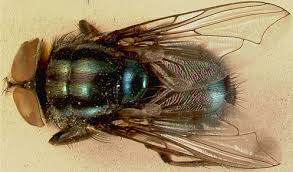
The larvae have dark pigment on their trachea so they are easy to identify. Other maggot species do not have this. You may see a bottle fly similar to the adult shown here. There is a very similar species, C. macellaria - common name green bottle fly. C. macellaria are common in the US and only eat necrotic tissue. They are used by forensic scientist to establish time of death.
Screwworms are the larval stage of the blue bottle fly aka blow fly with a scientific name of Cochliomyia hominivorax - “ eater of man “.
The screwworm has been eradicated since the 70s but its recent discovery in a population of Key Deer has the USDA and veterinarians on high alert to contain them. They are a potential danger to ranchers of cattle and sheep but also a danger to people, horses, pets and wildlife.
An adult female fly will “blow” her eggs (100-400) on to a fresh wound. The eggs will hatch in 12-24 hours. Screwworms differ from other larvae in that they will burrow into and eat the healthy tissue. Other maggots eat only necrotic tissue so do not cause damage to the host. Screwworm infestations can cause deep large wound tracts in flesh and bone. Any wound is an entry point even a small cut, the navel stump of a new born or the mucous membranes of the nose, mouth and eyes. After 5 -7 days they drop into the soil and pupate for only 7 days in a warm climate like south Florida. The adults can breed within 3 days after emerging from the pupa. They will mate 1 time in their life, lay eggs and die within 2-3 weeks.
Screwworm infestation was a huge problem for ranchers in the southern US and in 1958, the USDA released millions of sterile males. The theory was that the sterile males would out compete the wild males and decrease the population. Males eat only vegetation, not flesh. The program was successful and the screwworm was eradicated in the US and much of Mexico by 1972. Small populations remain in South and Central America and the Carribean and this outbreak is most likely from an animal or person traveling from an infected area to the keys.
Treatment includes removing the larvae manually, applying insecticide and cleaning and bandaging the wound so stock up on SWAT !
If you are in South Florida this winter, check your pets and horses. Call your veterinarian immediately if you suspect screwworms in a wound on your animal or you have a very smelly, slow healing wound.
The larvae have dark pigment on their trachea so they are easy to identify. Other maggot species do not have this. You may see a bottle fly similar to the adult shown here. There is a very similar species, C. macellaria - common name green bottle fly. C. macellaria are common in the US and only eat necrotic tissue. They are used by forensic scientist to establish time of death.
ABSTRACT
Abstract of Thesis Presented to the Master Program of the Chi Institute
in Partial Fulfillment of the
Requirements for the Degree of Master of Science
DETERMINING THE EFFECT OF LASER ACUPUNCTURE ON THE HEART RATE OF ACUTE-STRESSED HORSES
By
WENDY YING, DVM, TCVMP, CCRT
AUG 2016
Committee Members
Sam Wu, PhD
Huisheng Xie, DVM, PhD
Aituan Ma, MS, PhD
Anxiety in horses affects performance, health and value of sport horses and the reputation of trainers and competitors. Current treatments include behavior modification with pharmaceuticals, acupuncture, herbal supplements, mineral supplements and food therapy. We propose laser acupuncture, given before stressful situations can decrease anxiety and improve performance and health in horses.
A 2 day cross over study was performed on 24 horses who were either assigned to the treatment or control group on Day 1. Treatment horses were given laser acupuncture to reduce anxiety. Control horses were given sham treatment with the laser in the off position. All horses were fitted with a heart rate monitor and then exposed to an acute startle test (AST). Heart rate was monitored 1 minute pre and 10 minutes post AST. Peak HR and return to Baseline HR was noted. All horses were allowed a wash out period of 7 days and then assigned to the other group and results from both days were compared.
22 geldings and 2 mares ranging in age from 6 yrs to 29 yr were used. Breeds included Arabians, Quarter Horses, Warmbloods, Tennessee Walking Horses and grade horses. Disciplines included Jumpers, Hunters, Dressage, Driving, Fox hunting and Trail. Our data shows in some cases, laser acupuncture did reduce peak heart rate and decreased the time to return to baseline.
Further research needs to be done with a larger group of subjects. Modifying the acute startle test depending on the level of anxiety of the breed/discipline may give more meaningful results. Quarter Horses, trail and driving horses showed a very low level of startle (ie lower peak heart rate) compared to dressage horses and jumpers probably due to their exposure to loud noises in their daily activity. This model may be used to test the effectiveness of other kinds of acupuncture treatments, herbal therapies, pharmaceuticals and supplements claiming to be effective in controlling anxiety in horses and other animals.
Abstract of Thesis Presented to the Master Program of the Chi Institute
in Partial Fulfillment of the
Requirements for the Degree of Master of Science
DETERMINING THE EFFECT OF LASER ACUPUNCTURE ON THE HEART RATE OF ACUTE-STRESSED HORSES
By
WENDY YING, DVM, TCVMP, CCRT
AUG 2016
Committee Members
Sam Wu, PhD
Huisheng Xie, DVM, PhD
Aituan Ma, MS, PhD
Anxiety in horses affects performance, health and value of sport horses and the reputation of trainers and competitors. Current treatments include behavior modification with pharmaceuticals, acupuncture, herbal supplements, mineral supplements and food therapy. We propose laser acupuncture, given before stressful situations can decrease anxiety and improve performance and health in horses.
A 2 day cross over study was performed on 24 horses who were either assigned to the treatment or control group on Day 1. Treatment horses were given laser acupuncture to reduce anxiety. Control horses were given sham treatment with the laser in the off position. All horses were fitted with a heart rate monitor and then exposed to an acute startle test (AST). Heart rate was monitored 1 minute pre and 10 minutes post AST. Peak HR and return to Baseline HR was noted. All horses were allowed a wash out period of 7 days and then assigned to the other group and results from both days were compared.
22 geldings and 2 mares ranging in age from 6 yrs to 29 yr were used. Breeds included Arabians, Quarter Horses, Warmbloods, Tennessee Walking Horses and grade horses. Disciplines included Jumpers, Hunters, Dressage, Driving, Fox hunting and Trail. Our data shows in some cases, laser acupuncture did reduce peak heart rate and decreased the time to return to baseline.
Further research needs to be done with a larger group of subjects. Modifying the acute startle test depending on the level of anxiety of the breed/discipline may give more meaningful results. Quarter Horses, trail and driving horses showed a very low level of startle (ie lower peak heart rate) compared to dressage horses and jumpers probably due to their exposure to loud noises in their daily activity. This model may be used to test the effectiveness of other kinds of acupuncture treatments, herbal therapies, pharmaceuticals and supplements claiming to be effective in controlling anxiety in horses and other animals.
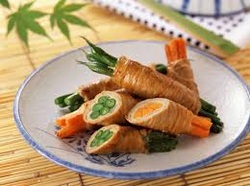
Food Therapy is one of the five branches of Traditional Chinese Veterinary Medicine. It is a practice of healing using natural foods along with or instead of medications. The Yellow Emperor's Classic of Internal Medicine (Huang-di-ni-jing, written around 300 BC) was most important in forming the basis of Chinese food therapy. It classified food by Yin and Yang food group and five tastes and by their natures and characteristics.
For example, Yang foods are believed to warm Yang, tonify Qi, dispel Cold, move Qi and Blood, resolve stagnation, stop pain. Yin foods nourish Yin, cool blood, clear heat, detoxify. Therefore, Yang foods (e.g., mutton and pumpkin) are used for Qi/Yang Deficiency, Qi-blood stagnation, wei syndrome, Lin syndrome, immunodeficiency. Yin Foods (such as turkey and tofu) are used for the treatment of Yin Deficiency, skin itching, autoimmune diseases, Cushing's disease.
Food Therapy is the preparation of using selected food ingredients and superior herbs. The goals of food therapy are
Whole, fresh foods should be a big part of your animal's diet. Processed foods and vitamin isolates lack the phytonutrients, enzymes and building blocks of whole foods. The first step to good nutrition is a variety of quality whole foods. When clients start home cooking for their dogs and cats, I recommend feeding platinum performance for support as a good adjunct to your home cooking. Here is the link to platinum performance, use code YIN when checking out.
For example, Yang foods are believed to warm Yang, tonify Qi, dispel Cold, move Qi and Blood, resolve stagnation, stop pain. Yin foods nourish Yin, cool blood, clear heat, detoxify. Therefore, Yang foods (e.g., mutton and pumpkin) are used for Qi/Yang Deficiency, Qi-blood stagnation, wei syndrome, Lin syndrome, immunodeficiency. Yin Foods (such as turkey and tofu) are used for the treatment of Yin Deficiency, skin itching, autoimmune diseases, Cushing's disease.
Food Therapy is the preparation of using selected food ingredients and superior herbs. The goals of food therapy are
- Health Promotion and Prevention — to improve health on a regular basis and to prevent seasonal climate related problems.
- Disease Treatment — to treat many clinical conditions including skin problems.
- Adjunct Therapy — to complement the primary treatment of diseases like kidney failure and cancer.
Whole, fresh foods should be a big part of your animal's diet. Processed foods and vitamin isolates lack the phytonutrients, enzymes and building blocks of whole foods. The first step to good nutrition is a variety of quality whole foods. When clients start home cooking for their dogs and cats, I recommend feeding platinum performance for support as a good adjunct to your home cooking. Here is the link to platinum performance, use code YIN when checking out.

Herbal Medicine is an essential part of Traditional Chinese Veterinary Medicine. In China, TCVM treatment consists of 30% acupuncture and 70% Chinese herbal medicine. Chinese herbal medicine has a rich history extending over several thousands of years and has proven to be an effective treatment modality.
Many formulas we use in practice today were developed many thousands of years ago. Some were developed for both animals and people, while others were developed specifically for animals. Formulas are used more commonly than individual herb so the actions of the herbs are balanced and the actions of one herb, say a warming herb, are not as damaging to the body because it is counter acted by a cooling herb. This balance can also be accomplished with diet ( see the Nutritional consult page)
All our herbal formulas come from Jing Tang and we can guarantee their quality. There are no illegal or environmentally controversial substances in our herbal products ie (no ephedra or rhino horn).
Many formulas we use in practice today were developed many thousands of years ago. Some were developed for both animals and people, while others were developed specifically for animals. Formulas are used more commonly than individual herb so the actions of the herbs are balanced and the actions of one herb, say a warming herb, are not as damaging to the body because it is counter acted by a cooling herb. This balance can also be accomplished with diet ( see the Nutritional consult page)
All our herbal formulas come from Jing Tang and we can guarantee their quality. There are no illegal or environmentally controversial substances in our herbal products ie (no ephedra or rhino horn).
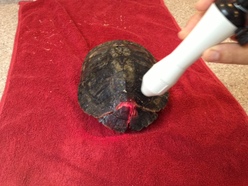
Laser is an acronym for :
- Light
- Amplification by
- Stimulated
- Emission of
- Radiation
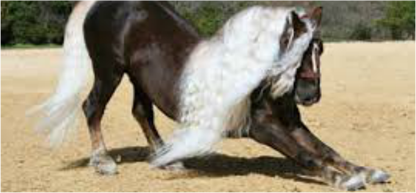
What is equine and canine rehab ? No, it is not a support group for animal hoarders. It is physical therapy for our animals. Physical rehabilitation's main goals are to reduce pain and bring the body back to its normal function. That is why Acupuncture and Chiropractic Care work so well together. Acupuncture restores the pain and brings the body back into balance and chiropractic mobilizes the joints and restores the body's normal functions. We can also use manual therapies like tui na (meridian massage), passive and active range of motion and exercise. We teach many of these exercises to the caretaker so you can become a partner in your pet's recovery.
Whether the injury is acute, like an accident or post op, or chronic like arthritis or compensation from an old injury or poor conformation, a solid rehabilitation plan is the fastest way back to normal function and performance.
We all know that a weak core leads to lumbar pain, that is why Dr. Kyle sends his human patients home with core stabilization exercises and yoga moves. We design exercise programs for dogs and horses to help them develop these muscles too. For horses, the exercises can be done under saddle or in hand. For dogs, we do positional exercises and even use tiny cavalettis for strength and paw awareness. One big difference in core strengthening in animals is...they get to eat treats during exercise ! Think about that next time you are doing crunches.
People ask me, does my animal need rehab ? Well in a way yes, all animals need a baseline amount of exercise and a healthy diet, just like people to stay healthy well into their golden years. Many diseases are caused by a sedentary lifestyle, obesity, diabetes, tendon injuries because they lack the muscle to protect themselves in a stumble, even general stiffness or a poor gait. Did your older horse go from an 8 mover to a 6 ? Does your old lab not want to jump in the truck anymore ? Maybe its not just that he is old. Maybe he needs some help to keep his joints moving and muscles firing so you can keep enjoying the company of your best pal.
Whether the injury is acute, like an accident or post op, or chronic like arthritis or compensation from an old injury or poor conformation, a solid rehabilitation plan is the fastest way back to normal function and performance.
We all know that a weak core leads to lumbar pain, that is why Dr. Kyle sends his human patients home with core stabilization exercises and yoga moves. We design exercise programs for dogs and horses to help them develop these muscles too. For horses, the exercises can be done under saddle or in hand. For dogs, we do positional exercises and even use tiny cavalettis for strength and paw awareness. One big difference in core strengthening in animals is...they get to eat treats during exercise ! Think about that next time you are doing crunches.
People ask me, does my animal need rehab ? Well in a way yes, all animals need a baseline amount of exercise and a healthy diet, just like people to stay healthy well into their golden years. Many diseases are caused by a sedentary lifestyle, obesity, diabetes, tendon injuries because they lack the muscle to protect themselves in a stumble, even general stiffness or a poor gait. Did your older horse go from an 8 mover to a 6 ? Does your old lab not want to jump in the truck anymore ? Maybe its not just that he is old. Maybe he needs some help to keep his joints moving and muscles firing so you can keep enjoying the company of your best pal.
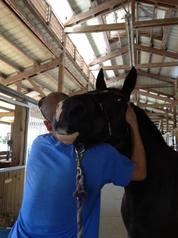
Most athletes , including animal athletes, are constantly dealing with bio-mechanical stressors to our spine, muscles, tendons, ligaments, and joints. In some cases this may increase our susceptibility to injury. Chiropractic care and Acupuncture may help to dramatically improve performance, improve health and decrease the likelihood for injury.
Based on hundreds of years of combined existence, Chiropractic Care and Acupuncture are still maintained as two of the largest drug-less and non-surgical healing professions in the world!! Chiropractic and Acupuncture’s holistic approach to health and wellness is centered around the body's ability to self restore and heal. The practice of Chiropractic and Acupuncture focuses on the relationship between the structure and the function of the body and how that relationship affects health.
Based on hundreds of years of combined existence, Chiropractic Care and Acupuncture are still maintained as two of the largest drug-less and non-surgical healing professions in the world!! Chiropractic and Acupuncture’s holistic approach to health and wellness is centered around the body's ability to self restore and heal. The practice of Chiropractic and Acupuncture focuses on the relationship between the structure and the function of the body and how that relationship affects health.

Dr. Wendy
Practices Traditional Chinese Veterinary Medicine in Sarasota, Florida
and hosts the Driving Radio Show and the TCVM segment on Horses in the Morning.
Categories
All
Acupuncture
Behavior
Chiropractic Care
Food Therapy
Herbs
Laser Therapy
Rehabilitation
Tcvm
Wellness
Archives
December 2023
February 2022
May 2020
April 2019
January 2019
September 2018
June 2018
January 2018
November 2017
August 2017
June 2017
April 2017
November 2016
August 2016
July 2016
September 2015
August 2015
June 2015
April 2015
March 2015
December 2014
February 2014
October 2013
September 2013
August 2013
July 2013
 RSS Feed